
Pulsacoil Repair Hanworth
Pulsacoil Repair Hanworth is the service to seek when a Gledhill PulsaCoil thermal store stops providing dependable hot water. Local repair is for Hanworth households whose system has failed or is no longer working reliably.
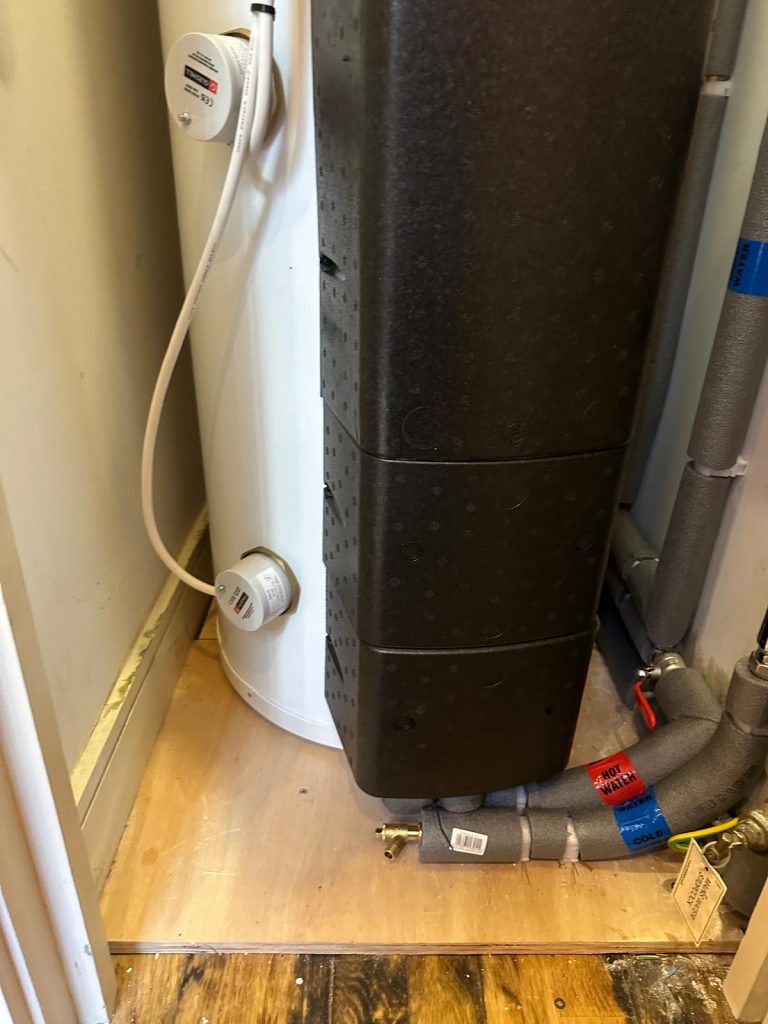
A thermal store is a unit that holds primary water and transfers its heat to mains water through a plate heat exchanger. The water at your taps is domestic hot water, kept separate from the primary water used for heating.
A fault can disrupt washing, bathing and other daily household routines. A qualified engineer can assess the system, identify the cause and explain the work needed. That gives you a practical basis for deciding what to do, rather than relying on guesses or replacing parts without confirmation.
Professional diagnosis also helps clarify whether the problem calls for a repair or a wider discussion about the unit’s condition. The aim is to understand the fault and the proposed work before anything is authorised. If hot water has failed or become unreliable, arrange a professional assessment rather than guessing at the fault.
Pulsacoil Repair Hanworth for Common Faults
A PulsaCoil can lose hot water because of an electrical, control, circulation or water-supply fault. The same symptom can have several possible causes, so the table is a guide to when to seek help, not a way to diagnose the system yourself.
No hot water can result from a failed component or a store that did not heat overnight. A faulty thermostat, malfunctioning immersion heater or low water level in the feed and expansion tank can also be involved. Arrange diagnosis rather than choosing a repair based on one symptom.
| Symptom | Possible cause | Safe response |
|---|---|---|
| No hot water | Failed immersion heater, thermostat, pump, sensor, PCB, plate heat exchanger or timer; low feed-and-expansion tank water | Arrange diagnosis |
| Red A Class fault light | Overheating | Request a service engineer |
| Unusual noise | Pump problem or trapped air | Arrange an inspection |
| Leak | Damaged seal, loose connection or excessive pressure | Seek professional help; avoid electrical parts |
On a Gledhill PulsaCoil A Class, a red fault light means the system has overheated and needs attention from a service engineer. Do not assume that resetting a control will resolve the cause. A qualified engineer should assess why the warning appeared.
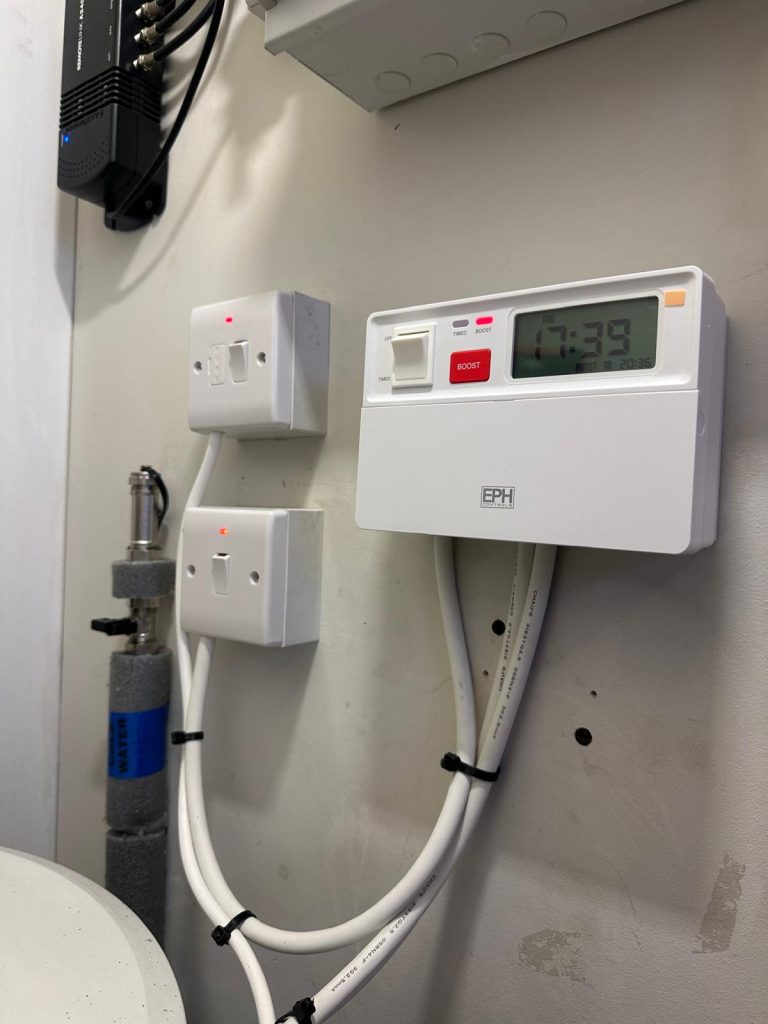
A timer fault may prevent the store heating overnight on an economy-seven tariff. That can leave you without enough hot water the next day, even though the system appears to be operating at other times. A timer is only one possible cause, so the diagnosis still needs to consider the unit as a whole.
Noise can point to a circulation-pump issue or air trapped in the system. A leak may come from a damaged seal, loose connection or excessive water pressure. Keep clear of electrical parts if water is present, and do not open the unit to investigate.
The table helps you describe what is happening when you arrange support, but it cannot confirm which part has failed. Note when the symptom began and whether it changes with use. Treat an illuminated A Class red fault light as an overheating warning and arrange service-engineer attention.
How a PulsaCoil Repair Is Diagnosed and Completed
A reliable repair starts by testing the system and confirming the failed component, not by replacing parts on a guess. The qualified engineer should explain the findings and agree the work with you before proceeding.
The system uses a plate heat exchanger to transfer heat from primary water to mains water. The primary water stays inside the heating circuit; domestic hot water flows separately to your taps. This arrangement means a fault in heat transfer can affect tap water without the two supplies mixing.
A careful visit follows a clear sequence. The engineer records the symptoms, checks how the system operates and examines relevant electrical and hydraulic components. Once the fault is confirmed, the engineer can explain the repair options and any parts required.
- Record the symptoms and when they occur.
- Check system operation and relevant components.
- Confirm the fault and discuss the proposed repair.
- Carry out only the agreed work.
- Test hot-water operation after the repair.
Model-specific knowledge matters when selecting parts. The PulsaCoil A Class manual specifies a 3 kW, 14-inch Incoloy immersion heater. It also specifies an 11-inch rod thermostat and a separate manual-reset overheat cut-out.
Those dimensions and controls are not interchangeable assumptions for every PulsaCoil model. A qualified engineer should identify the installed version before sourcing parts. Correct identification can prevent an unsuitable component being fitted or an unnecessary replacement being proposed.
After the agreed work, testing should confirm that the system operates and provides hot water. Ask what was checked and whether any limits remain, such as a further part or repair that was not included in the initial scope.
A clear explanation makes it easier to understand the repair, its cost and any remaining concern. Ask the engineer to explain the confirmed fault and obtain your agreement before additional work is carried out.
Repair or Replace a PulsaCoil Unit?
Repair is usually the first option to assess when diagnosis identifies a replaceable component and the rest of the unit remains suitable for use. A newer unit is not automatically the right answer if a safe, compatible component repair can restore operation.
The decision depends on the confirmed fault, the system’s condition, the availability of compatible parts and the written quote. A repair may be unsuitable if damage affects the unit more widely or a safe repair cannot be completed. Ask the engineer to explain why the proposed work is appropriate.
Replacement may be worth discussing when the unit’s condition makes continued repair impractical, or when suitable parts cannot be sourced. Gledhill PulsaCoil Stainless models are available in capacities from 150 litres to 210 litres. The installed cylinder’s type and condition should inform any comparison.
Check what a repair quote includes, including labour, parts and any testing after the work. A replacement quote should set out the proposed unit, installation work and any changes needed at the property. Comparing the scope helps you judge the options on more than the headline price.
The Gledhill PulsaCoil Stainless 210-litre model is listed with a manufacturer’s guarantee of five years. That guarantee applies to that model only, not to every PulsaCoil or Stainless unit. Check the terms for the specific unit being considered, including what work and parts are covered.
Age alone does not confirm that replacement is necessary. A well-defined component fault may still be repairable, while a broader condition issue can change the balance. Ask the engineer to distinguish the fault itself from any separate concerns about the unit.
A quote should give you enough detail to make an informed choice without pressure to approve unplanned work. Compare the proposed repair scope with a replacement quote before authorising a full unit change.
Choose the Right Thermal Store Size for Your Home
Cylinder choice needs to match both the household’s hot-water habits and the space available for installation. The number of residents, bathing routines and shower use all affect demand, so a capacity that suits one household may not suit another.
A useful thermal-store sizing guide is 35-45 litres per household resident. Treat this as a starting point, then consider how often people shower or bathe and whether hot-water use overlaps. Daily-use estimates can help you describe the household’s pattern to a qualified installer.
| Daily use category | Estimated litres per person per day | Planning consideration |
|---|---|---|
| Low | 20-30 litres | Lower daily demand |
| Average | 30-50 litres | Moderate daily demand |
| High | 50-70 litres | Higher daily demand |
A shower is estimated to use 18 litres of hot water per minute at 40°C, equivalent to 11 litres at 60°C. A bath uses an estimated 100 litres at 40°C, equivalent to 60 litres at 60°C. These estimates show why the way water is used matters as much as the number of residents.
The 210-litre PulsaCoil Stainless model measures 1,488 mm high and 550 mm in diameter. These are model-specific dimensions, not standard measurements for every PulsaCoil. Check the available height and width, as well as clearance for fitting and future access.
That model has two immersion heaters, each rated at 3 kW and 240 V AC. Its thermostat is set at 73°C, with an overheat thermostat at 90°C. These electrical and temperature details apply to the 210-litre Stainless model, not every unit in the range.
The same model has a stated heat loss of 62 watts, or 2.08 kWh per 24 hours. It weighs 47 kg empty and 258 kg full. Those figures matter when planning the position and installation, particularly where the floor or access route needs careful consideration.
Household energy use also depends on the chosen capacity and how often the store needs heating. A larger cylinder may suit higher demand, but it still needs to fit the property and be installed appropriately. A qualified installer should confirm sizing and physical access before replacement.
Measure the intended location and consider doorways, stairs and turns along the route. A cylinder can fit the final space but still be difficult to move into position. Confirm the route into the property and the cylinder’s installed position as well as its capacity.
Book a Hanworth Visit and Prepare Safely
A clear description of the model and fault helps the engineer prepare for a focused visit. When arranging support, give the model name, what has happened and when the problem occurs, along with any visible warning light or leak.
The service process should be clear before work begins. Share the details, receive a quote for the proposed work, then approve the scope and agree a visit. Ask what the quote covers so you know which work is included before giving permission.
Useful details to have ready include:
- The model name or a photo of its label.
- The symptom and when it started.
- Any warning light or fault display.
- Safe access to the unit and surrounding area.
A photo of the label or visible controls can help identify the system before the engineer arrives. Do not remove covers to take a picture. If you see a leak, describe where it is and whether it is near electrical parts, without touching the affected area.
The PulsaCoil support guide recommends a check by a qualified technician at least once a year. This is maintenance guidance, not a legal requirement. Regular attention can help keep the system in suitable working order, while any repair still depends on the fault found during assessment.
The Electricity at Work Regulations 1989 set duties concerning electrical systems and work to prevent danger. Do not open the unit or work on electrical components yourself. A qualified engineer can carry out relevant checks using appropriate competence and safe working practices.
Before the visit, clear nearby items only if you can do so safely. Do not move a heavy cylinder or try to improve access by handling wiring or pipework. Tell the service team about restricted access when arranging the appointment.
Keep the model information and fault description together, and note any change before the agreed visit. Leave internal electrical checks to a competent professional and only make the unit accessible if you can do so safely.
Arrange PulsaCoil Support in Hanworth
If your PulsaCoil has stopped providing reliable hot water, request an assessment and describe the symptoms you are seeing. A professional review can establish the work needed and help you decide on a suitable next step for your Hanworth household.
Share the model details and a concise account of the problem when contacting a local service team. Ask for the proposed scope and cost to be confirmed before work starts. This gives you a clear basis for deciding whether to proceed, without relying on assumptions about the repair.
Clear information helps the service team understand what support may be required and prepare for the visit. Keep a photo of the model label available if you have one, and describe when the issue began. Have the model details and fault description ready when you contact the service team.
FAQ
Why does my PulsaCoil hot water fail after several showers or a bath?
Repeated showers or a bath can use more hot water than the cylinder’s available capacity can supply at that time. Compare your household’s pattern with the daily-use guidance: low use is estimated at 20-30 litres per person, average at 30-50 litres and high at 50-70 litres. Ask a qualified installer to check whether the system’s capacity suits your household demand.
Can an economy-seven timer stop a PulsaCoil from heating overnight?
Yes, a failed economy-seven timer may stop a PulsaCoil from heating overnight. The store may then have too little heat available for the next day’s hot-water use. An immersion heater, thermostat or control fault can also prevent heating, so the timer should not be assumed to be the cause without diagnosis.
Can a PulsaCoil be repaired if a part is no longer available?
Possibly, but the qualified engineer must confirm whether a compatible part is available and whether fitting it would allow a safe repair. A substitute is not suitable simply because it appears similar. If no compatible part or safe repair is possible, replacement may need consideration alongside the unit’s overall condition and the quoted work.
What should I photograph before booking a PulsaCoil visit?
Photograph the model label and any visible controls or warning light. These images can help identify the version and give the service team useful detail before arranging a visit. Do not remove covers or move electrical parts to get a clearer picture. If a label is hard to reach, describe its position instead.
Is a PulsaCoil the same as an electric boiler?
No, a PulsaCoil is an electric thermal store, not a conventional boiler. It holds primary water and transfers heat to mains water through a plate heat exchanger, which supplies domestic hot water to taps. The two water supplies remain separate. Its components and repair approach therefore differ from those of a conventional boiler.
What can change the final cost of a PulsaCoil repair?
The confirmed fault, parts required, access to the unit and any additional work can affect the final repair cost. A straightforward component repair may involve a different scope from work that needs several parts or more time on site. Ask for the agreed scope and cost in writing before work begins, and approve any extra work separately.