
Pulsacoil Repair Hackney
A specialist engineer should diagnose a faulty PulsaCoil in Hackney before you decide whether it needs a repair or replacement. Losing hot water disrupts washing, cooking and the usual routine at home, so it is understandable to want a clear next step. Arrange an assessment with an engineer familiar with these systems, then confirm the appointment and proposed work before proceeding.
A fault can involve electrical controls or water-side components, and the visible effect may not show which part has failed. Diagnosis should come before decisions about parts or a new unit. The system stores heat and transfers it to your hot-water supply, so an assessment needs to consider how the whole arrangement works, not just whether water is reaching a tap.
When you contact a service provider, ask what the appointment covers and how you will approve any work. The time needed can depend on what the engineer finds and whether suitable parts are available. Keep the unit’s model details and a brief description of the fault ready when arranging help.
Pulsacoil Repair Hackney: What a Repair Visit Covers
A PulsaCoil stores heat in a thermal store and transfers it to mains water through a heat exchanger, so diagnosis needs to account for more than a conventional boiler fault. A thermal store is an insulated unit that holds heated primary water and transfers its heat to mains water through a heat exchanger.
The engineer needs to identify how the unit stores heat and transfers it to the domestic hot-water supply. Unlike a conventional boiler, the system may hold heated primary water ready for heat transfer rather than heating tap water directly. That difference shapes what the engineer checks during repair.
A Gledhill PulsaCoil repair in Hackney should be booked only after confirming that the provider covers your postcode. Once that is clear, describe the issue and share the model name. This helps the engineer prepare to assess the right type of system, though the cause still needs checking in person.
The hot-water outlet temperature is controlled by either a pump speed control board or a blending valve. The engineer needs to establish which arrangement applies to your unit. A repair may involve a water-side part, an electrical control or a component that affects heat transfer, so a boiler-style diagnosis alone may not be enough.
Ask what the assessment has found and how it affects the proposed repair. A clear explanation should connect the identified fault to the work being recommended, rather than treating the system as a standard cylinder. Ask the engineer to explain which part of the system the diagnosis points to before authorising work.
Common PulsaCoil Faults and Safe Checks
A PulsaCoil with no hot water may have an immersion-heater, thermostat, pump or control fault, so the symptom alone does not identify the failed part. Common problems also involve sensors and printed circuit boards. Treat the signs as useful information for an engineer, not as a diagnosis you can make from the outside.
These five symptom groups can help you describe the issues clearly:
- No hot water, or a supply that is inadequate for normal use.
- Water that is too hot or changes temperature while running.
- Water leaking near the unit, pipework or connected fittings.
- Electrical tripping or flashing lights on the control panel.
- Unusual noises from the unit, or weak flow at a hot tap.
Several different faults can produce similar symptoms. For example, weak flow does not by itself establish a pump fault, and flashing lights do not name a failed control part. Note when the issue occurs, how long it lasts and whether it affects one tap or the whole home.
Only make basic observations from outside the casing. Do not remove it or attempt electrical repairs, even if a component looks easy to reach. Record visible indicators, including any flashing lights, and pass those details to a qualified professional instead of opening the unit.
A leak should also be described by its visible location, without dismantling pipework or the unit. If water is reaching electrical equipment, keep clear and seek professional help. If the electrics trip repeatedly, stop resetting the system and arrange a professional assessment.
How Diagnosis and Repair Usually Work
A PulsaCoil repair visit starts with diagnosis, and many repairs take 1-3 hours once the engineer is on site. That is an estimate of work time, not a promise about when the engineer will arrive or how long your home will be without hot water.
The visit usually follows four stages:
- Report the model name and the symptoms you have noticed.
- The engineer inspects the unit and diagnoses the fault.
- The engineer explains the proposed work and gets your approval.
- The engineer completes authorised work and checks operation.
Diagnosis may involve checking an immersion heater, thermostat, printed circuit board or pump. The engineer should explain what the checks show and identify the parts that may need attention. This assessment gives you a basis for deciding whether to approve the suggested repair.
Repairs often take 1-3 hours, but complex faults can extend the work. The visit may also take longer if the correct spare parts are not available when needed. Ask how the engineer will handle the job if the diagnosis changes the expected scope or requires another part.
Work time is only one part of the interruption to your hot-water supply. Attendance, the fault’s complexity and parts availability can affect the overall period without hot water. Ask for an update if the engineer finds that the original estimate no longer fits the work required.
Keep the agreed scope clear, including which parts are to be replaced and what checks will follow. Agree the scope of work before any replacement parts are fitted.
PulsaCoil Models and Parts an Engineer May Check
The PulsaCoil model name helps an engineer narrow down which controls and parts to inspect. The 2000 pulsacoil, for example, has reported thermostat or immersion-heater faults, while the A Class has reported sensor or printed circuit board faults.
Reported examples are starting points for diagnosis, not proof that a particular component has failed. The engineer needs to check your unit and confirm the fault before choosing spare parts. This matters because a part that fits one system may not be compatible with another model.
| Model | Reported fault examples | Diagnostic focus |
|---|---|---|
| PulsaCoil 2000 | Thermostat or immersion-heater fault | Check the relevant heating control and component |
| PulsaCoil A Class | Sensor or printed circuit board fault | Check the control and sensor readings |
| PulsaCoil BP | Overheating or no hot water | Check the temperature-control and heating components |
PulsaCoil Eco, PulsaCoil 3 and PulsaCoil 3D are other named models. Their names help the engineer identify the system, but do not assume that reported issues from another model apply to yours. Give the exact name shown on your unit or its paperwork.
The model can also help the engineer check whether a proposed spare part suits the system. Avoid ordering a component based only on a symptom or a general model description. An incorrect part can delay the repair and may not match the unit’s controls or connections.
Share the model name before the visit, then ask how the engineer has confirmed the part is suitable. Confirm compatibility against the exact model before approving a spare part.
Repair or Replacement: Choosing the Practical Option
Repair is usually the first option to assess, while replacement becomes relevant when the unit’s condition, parts or repair outlook make continued use impractical. The decision depends on the diagnosed fault, the unit’s condition, suitable parts and likely future repair needs. Age alone does not make replacement automatic.
Household demand also matters when you compare options. A common planning allowance is 35-45 litres per resident, though residents’ routines and water use affect the capacity that will suit your home. An installer should calculate the required capacity for the household rather than rely on a rough figure alone.
| Daily-use category | Estimated litres per person per day | Household planning note |
|---|---|---|
| Low | 20-30 litres | Lower-use pattern |
| Average | 30-50 litres | Typical-use planning range |
| High | 50-70 litres | Higher-use pattern |
A shower uses about 18 litres per minute at 40°C, equivalent to 11 litres at 60°C. A bath uses about 100 litres at 40°C, equivalent to 60 litres at 60°C. These figures help show why shower length and bath frequency can affect the tank capacity your household needs.
A standard four-person household is estimated to need at least a 200-litre hot-water tank. This is a planning estimate, not a capacity recommendation for every home. The number of residents, their habits and the way they use showers or baths can shift the required size.
Ask the installer to assess the demand before choosing a replacement tank or cylinder. Do not choose a smaller replacement tank without checking household use and having the required capacity assessed.
Pricing, Appointments and Checking a Repair Provider
A clear written quote should separate diagnosis, labour and any parts before you approve work. The price may depend on diagnostic time, the fault, required parts and whether the work is a repair or replacement. Ask for the call-out or diagnostic charge, labour basis, parts costs, VAT treatment and approval process in writing.
When comparing pricing, check that each quote covers the same work. An initial figure may relate to diagnosis only, while another may include labour or a part. Ask what happens if the engineer finds a different fault, and whether you must approve extra work before it starts.
Give these four details when booking:
- Your Hackney postcode.
- The exact model name.
- The symptoms and any visible error indicator.
- Whether the unit is still under a manufacturer warranty.
Appointment availability depends on postcode and current demand. Hackney is in London, but that does not confirm that every provider covers your street or has an appointment available today. Ask directly about the areas served and the appointment window before making arrangements.
When checking Gledhill PulsaCoil repair London reviews, look for genuine, verifiable customer feedback. Check that comments relate to the relevant repair service, rather than assuming that reviews for a different service apply. Reviews can inform your choice, but they do not replace a written scope and quote.
Confirm who will carry out the assessment and what the appointment includes. Check whether any charge applies if access is unavailable or the visit cannot proceed. Confirm the appointment window and any charges that apply if the visit cannot proceed.
Warranty and Maintenance for a PulsaCoil System
Check the warranty documents and manufacturing date before agreeing to paid work on a PulsaCoil Stainless thermal store. It has a 1-year parts warranty and a 5-year cylinder warranty, with the cylinder cover dependent on the manufacturing date.
Check the paperwork for the exact unit and compare its manufacturing details with the warranty terms. Do not assume that a fault is covered because the system appears relatively new. The relevant dates and the wording in the documents affect whether manufacturer cover may apply.
Ask how a proposed paid repair could affect a warranty claim before approving it. The manufacturer’s warranty is separate from any cover a repairer offers for its own work or parts. One does not automatically extend, replace or describe the other.
Maintenance can include inspection, cleaning and replacing parts where needed. The suitable work depends on the system’s condition, so an engineer should assess what is relevant to your unit. Follow the manufacturer’s guidance for your model rather than assuming one service interval suits every PulsaCoil.
Keep any paperwork from maintenance or repair with the unit’s documents. Clear records can help you explain what work has already been done if another fault occurs. Ask the engineer to note the parts changed and the checks completed, especially when a repair relates to a warranty concern.
Keep the model and manufacturing details with the warranty paperwork for any future claim.
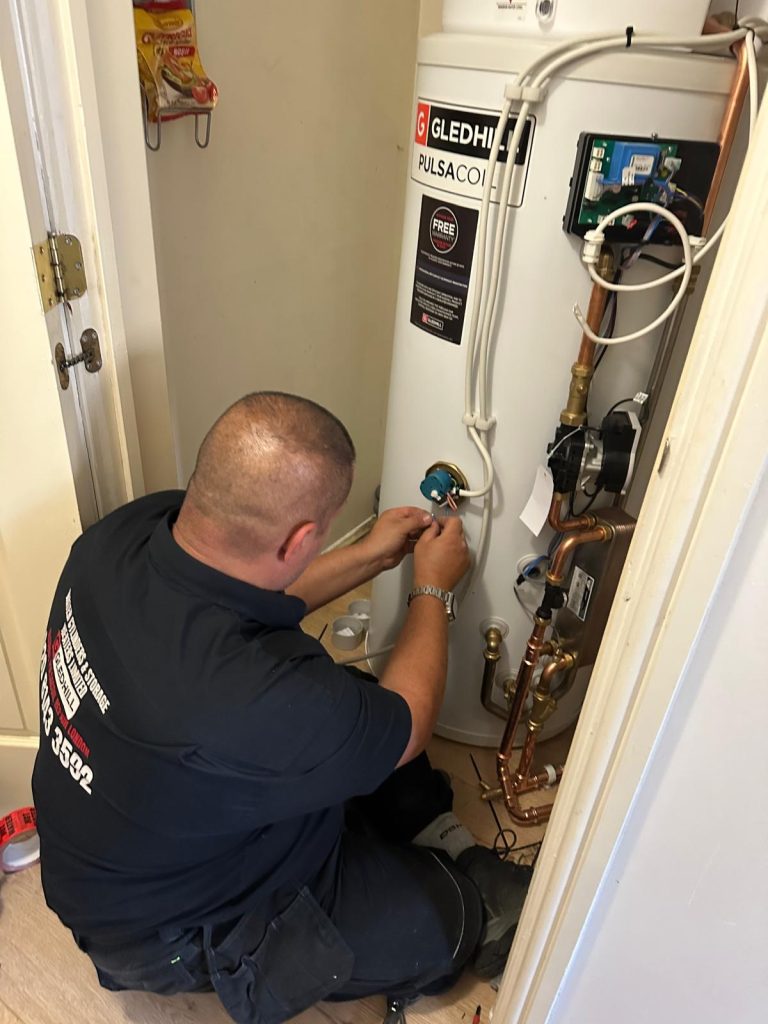

Arrange a PulsaCoil Assessment in Hackney
If your PulsaCoil is not providing reliable hot water, contact London Electricians 24/7 to ask about an assessment for your Hackney postcode. Confirm postcode coverage and appointment availability directly, since the service area and available times can depend on current demand.
Have the model details and a short description of the issue ready when you contact the service team. Ask what the appointment includes and request a written scope and quote before work starts. This gives you a clear basis for deciding whether to proceed.
Before the visit, make sure you understand the proposed work and any cost you would need to approve. Have the model details ready and approve only the work and cost you have agreed.
FAQ
Can a PulsaCoil be repaired if it is leaking?
Yes, a leaking PulsaCoil can sometimes be repaired, and a leak does not automatically mean the unit needs replacement. The engineer must identify whether water is coming from a replaceable fitting or from the unit itself. The location and cause matter, so describe where you can see water without removing the casing or dismantling the system.
How long will I be without hot water during a PulsaCoil repair?
Many PulsaCoil repairs take 1-3 hours on site, but that is not a guarantee of the total time without hot water. The overall interruption also depends on when the engineer can attend, how complex the fault is and whether suitable parts are available. Ask the engineer to update you if the expected work time changes after diagnosis.
Can I reset a PulsaCoil after it trips the electrics?
Follow only the reset instructions in the user guidance for your specific model, and do not remove the casing. If the electrics trip again, stop resetting the system and arrange a professional assessment. Repeated trips can signal an electrical fault, and resetting does not identify or fix its cause. Tell the engineer when the trip occurred and whether it has happened before.
How often should a PulsaCoil thermal store be serviced?
Follow the manufacturer’s guidance for your model, then ask an engineer to recommend an interval based on the system’s condition. One timetable may not suit every unit, as maintenance needs depend on its state and the work it requires. An inspection can help identify whether cleaning or replacing a part is appropriate, without assuming every system needs the same tasks.
Can an older PulsaCoil still be repaired?
Yes, an older PulsaCoil can still be repaired if its condition allows and suitable compatible parts are available. The engineer should assess the unit and explain whether the fault can be addressed with parts that fit that model. A unit’s age alone does not determine the decision, so ask for the diagnosis and repair scope before deciding on replacement.
Can an undersized thermal store run out of hot water?
Yes, an undersized thermal store can run out of hot water when its stored capacity does not meet household demand. The number of residents and their shower and bath habits affect the amount needed. An installer should assess household use before recommending capacity, rather than relying on resident numbers alone or choosing a tank size without considering daily routines.