
Pulsacoil Repair Erith
A household in Erith turns on a tap and finds the PulsaCoil system’s hot water cold or inconsistent. If this is happening in your home, a specialist assessment can help identify what has gone wrong and what needs attention.
A thermal store is a vessel that stores heated water so it can be used later. The cylinder supplies hot water around your home, but a fault can leave the supply unreliable. Local engineers can assess the system and explain the next steps.
When booking, confirm that the service covers your Erith address and ask about appointment availability. Timing depends on the provider’s schedule, so do not assume a particular response time. To arrange a useful diagnosis, first note the symptoms you have noticed.
Pulsacoil Repair Erith: Common Faults and Symptoms
A PulsaCoil can still power on while no longer delivering reliably hot water. A pulsacoil repair starts with understanding what you have noticed, but symptoms alone cannot show which component has failed.
Common issues include problems with heating, electrical parts, water flow and controls. Note when the fault occurs and whether it changes overnight, as this can help an engineer investigate the system.
- No hot water, or water that stays lukewarm.
- Repeated electrical tripping when the system runs.
- A leak or wet patch near the cylinder or pipework.
- Flashing display lights, overheating or underheating.
- Reduced hot-water output, unusual noises or Economy 7 not heating overnight.
These problems can have several causes, so a symptom does not identify the failed part. An immersion heater, thermostat, PCB, temperature sensor, pump, valve or seal may be involved. Scaling can also affect how the system heats and delivers water.
For example, weak output might relate to flow, heat transfer or a control issue. Unusual noises can have more than one explanation. A professional diagnosis is needed before choosing parts or agreeing to repair work.
Do not keep resetting a circuit that repeatedly trips. Resetting it again instead of arranging an electrical check can leave an underlying fault unexamined. Switch to qualified help if the circuit will not stay on.
Describe the symptoms clearly when seeking pulsacoil repairs, including whether the problem is constant or comes and goes. An engineer needs to trace the cause before recommending a repair.
What a Specialist PulsaCoil Diagnosis Involves
A PulsaCoil is an electric thermal store, not a conventional boiler. Diagnosis calls for an engineer familiar with both its electrical controls and plumbing connections, rather than a boiler visit alone.
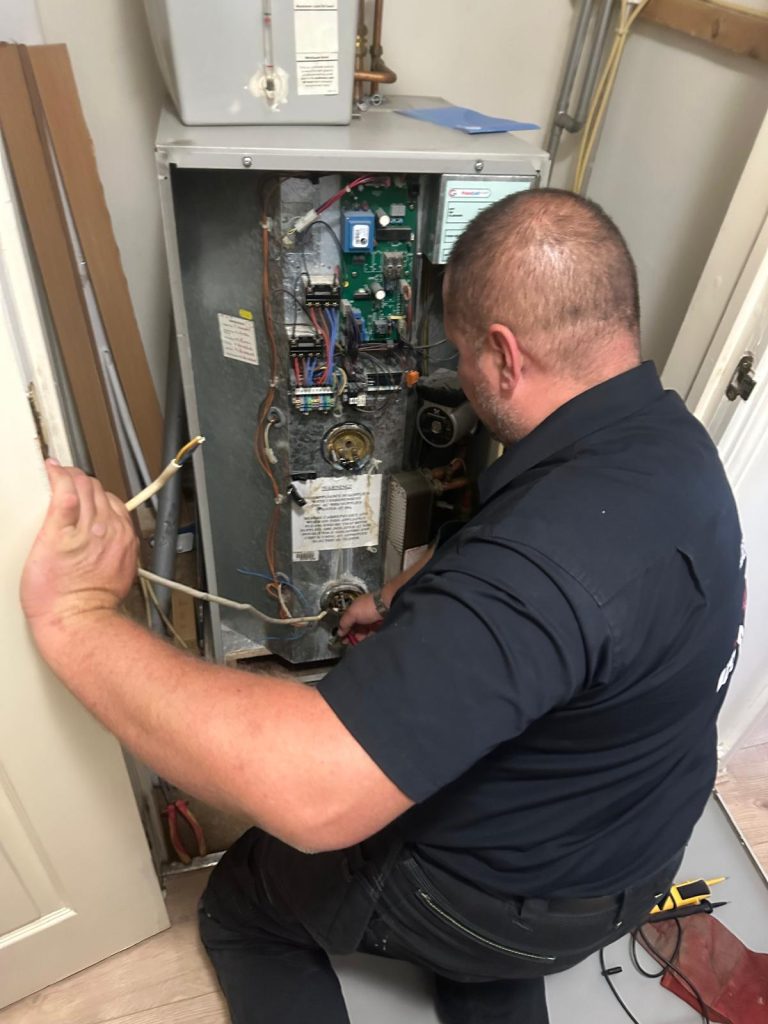
The specialist engineer may inspect the immersion heaters, PCB, thermostats, sensors and pump. They can check how the system heats and transfers energy, then test relevant controls and connections. These checks help distinguish a failed part from a wider operating issue.
| Reported symptom | Possible area to check | Diagnostic focus |
|---|---|---|
| No hot water | Immersion heater or thermostat | Test heating and controls |
| Flashing lights | PCB or sensor | Interpret display and check components |
| Unusual noise | Pump or air in system | Inspect operation |
| Weak hot-water delivery | Scaling or flow components | Check heat transfer and water flow |
These are possible areas to investigate, not a diagnosis based only on symptoms. Hard-water scaling can affect components such as the plate heat exchanger, reducing how well heat transfers to the water. The engineer’s checks should establish what is happening in your system.
A general boiler visit may not be suitable if the engineer lacks thermal-store experience. PulsaCoil repairs can involve electrical testing as well as plumbing work, so ask whether the service includes experience with this type of appliance.
Straightforward repairs often take 1-3 hours, though the fault and parts availability can affect the time. Once the diagnosis is clear, the engineer can discuss the work and identify the model that needs attention.
PulsaCoil Models an Engineer May Be Asked to Repair
Checking the appliance label before calling helps an engineer identify the right diagnostic approach. PulsaCoil models include PulsaCoil Thermal, PulsaCoil 3, PulsaCoil 2000, PulsaCoil A-Class and PulsaCoil 3D.
The range also includes PulsaCoil BP, PulsaCoil Eco, PulsaCoil Original or 1, and PulsaCoil Stainless. Product labels and generations vary, so use the exact wording shown on your unit rather than relying on what someone has called it.
Look for the label on the cylinder or check the paperwork supplied with the system. Share the exact model with the engineer when you book. If the display shows a code, record that too, or take a clear photo to pass on.
Model details matter because parts and the right diagnostic approach can vary between systems. A component used on one version may not be the right fit for another. Accurate information can help the engineer prepare for the visit and check what may be needed.
The name alone does not confirm that every replacement part for an older model is still available. An engineer may need to identify the specific component and assess whether a suitable part can be sourced. Do not assume a model’s age settles the question either way.
Gledhill PulsaCoil systems have been made in different versions, and an older label can still help narrow down what the engineer needs to inspect. Providing the model and any display code gives the service a clearer starting point.
Once the appliance has been identified, the next practical question is what determines the repair quote. Ask for the expected work to be explained before you approve it.
What Affects the Price of a PulsaCoil Repair
The final charge depends on what has failed and what work is needed. Price reflects the fault, any diagnostic or call-out charge, labour, parts and whether VAT is included.
Ask for a written breakdown before agreeing to the repair. It should make clear which work is included and whether the quoted amount covers diagnosis, labour and the parts required. Transparent pricing helps you understand what you are being asked to approve.
Check whether a further visit would add a charge if the engineer needs to order a part. Ask whether the quoted labour covers the full job or only the initial hours. Parts availability can affect both the work required and the time needed to complete it.
Confirm what warranty applies to the work and any fitted parts. The terms can differ, so ask what is covered and for how long. Keep the written details with your service paperwork in case you need to refer to them later.
A common mistake is comparing quotes without checking whether VAT, parts and follow-up visits are treated alike. One quote might include an item another lists separately. Compare the same scope of work, and check any exclusions before making a decision.
If the diagnosis changes the proposed work, ask for an updated breakdown before authorising it. You can then consider the repair in light of its likely scope, cost and any warranty offered, rather than relying on an initial estimate.
Cost is one part of the decision. The condition of the cylinder and the availability of essential parts also help determine whether repair or replacement is the more appropriate route.
When Repair or Replacement Makes More Sense
A failed serviceable component may be repairable, while a damaged cylinder can make replacement more appropriate. The engineer should identify the cause and condition before recommending either route.
A leak does not automatically mean the cylinder has failed. Water can escape from an accessible connection or fitting, so a qualified engineer should pinpoint the source and check for further damage before deciding what work is suitable.
| Condition found | Possible route | What determines the decision |
|---|---|---|
| Failed serviceable component | Repair | Component condition and parts availability |
| Leak at accessible connection or fitting | Assess and repair if suitable | Pinpoint leak and check for further damage |
| Irreparable internal cylinder leak or unavailable essential parts | Consider replacement | Cylinder condition and feasibility of sourcing parts |
If a valve, pump or other serviceable part has failed, the engineer can assess whether replacing that component is practical. Its condition and the availability of a suitable part matter. A repair may not be possible if an essential component cannot be sourced.
A leak from an accessible fitting may be repairable once its source is found and the surrounding area is checked. By contrast, an irreparable leak from the internal cylinder itself may rule out a straightforward repair. That can make replacement necessary.
Ask the engineer to explain the diagnosis and the options in plain terms. You need to know what has failed, whether a repair is feasible and what the alternative involves. The recommendation should reflect the system’s condition, not the leak alone.
When arranging your next step, share the diagnosis and the options you have been given. Clear details help the service understand what has already been checked and what decision still needs to be made.
Booking a PulsaCoil Engineer in Erith
Calling with the model and fault symptoms ready can make it easier to arrange an assessment. Before you book, gather a few details so the engineer can understand the problem and the access needed.
- The exact model, or a photo of its label.
- The symptoms and when they began.
- Any display code or electrical tripping.
- Access details and suitable appointment times.
Confirm that the provider covers your Erith address, as service areas can vary across Greater London. Ask what appointment availability they currently have, rather than assuming an engineer can attend today. Timing should be agreed directly when you book.
Check whether the provider has a call-out or diagnostic charge and what it covers. Ask whether you can book online or request an emergency repair appointment. Online booking and emergency appointments may not be offered by every service.
An urgent booking request does not guarantee immediate attendance. Confirm the likely appointment time directly, and explain if the system has stopped supplying hot water or if a circuit keeps tripping. This helps the provider understand the urgency without creating an expectation they have not confirmed.
If you have already had an assessment, tell the service what the engineer found and whether any parts were recommended. That information can help them decide what details to bring or what to ask before arranging another visit.
Keep your notes and any photos nearby when contacting the engineer. With the model, symptoms, access details and suitable times to hand, you can make the booking and move towards a proper assessment.
Arrange Your Erith PulsaCoil Assessment
Provide the model and symptoms when requesting an appointment. A suitable repair depends on a proper diagnosis, and clear details can help the booking process run smoothly.
Contact a qualified PulsaCoil engineer serving Erith and request an assessment. Confirm appointment availability and charges before work begins, so you know what has been agreed.
For greater peace of mind and a more reliable hot-water supply, book an assessment with a qualified local engineer.
FAQ
How much does a PulsaCoil repair in Erith cost?
The quote depends on the fault, diagnostic or call-out charge, labour, parts and how VAT is treated. Ask for a written breakdown that shows which items are included and whether follow-up visits could add charges. Confirm the warranty for the work and any parts before you authorise it. Comparing quotes is useful only when they cover the same work and costs.
Can I keep resetting a PulsaCoil circuit that keeps tripping?
No, do not repeatedly reset a circuit that will not stay on. Repeated tripping can indicate an electrical fault that needs qualified diagnosis, and resetting it again does not identify or fix the cause. Stop trying to restore power through repeated resets and arrange an electrical check by a qualified professional. Tell them when the tripping occurs and whether it happens as the system starts heating.
Does an Economy 7 heating problem mean the cylinder needs replacing?
No, an Economy 7 heating problem does not by itself mean the cylinder needs replacing. The timer, electricity supply, controls or a heating component may need checking first. A specialist engineer can trace why the system is not heating overnight and identify whether a repair is suitable. Replacement should only be considered after the fault and the cylinder’s condition have been assessed.
Are parts available for every older PulsaCoil model?
No, parts are not guaranteed to be available for every older model. Availability depends on the exact model and the component that has failed. An engineer may need to identify the part and assess whether a suitable replacement can be sourced. The model name alone does not confirm availability, so share the label details and any relevant paperwork when arranging an assessment.
Can a leaking PulsaCoil always be repaired?
No, a leak cannot always be repaired. A leak from an accessible fitting or connection may be suitable for repair, but a qualified engineer needs to find its source first. An irreparable leak from the internal cylinder can make a straightforward repair unsuitable and may mean replacement is needed. A wet patch alone does not show which part is leaking.
What should I have ready when I book a PulsaCoil engineer?
Have the exact model or a photo of its label ready, along with a clear description of the symptoms. Note when the fault began, any display code and whether an electrical circuit is tripping. Also give the engineer access details and appointment times that suit you. These details help the service understand the issue before arranging the visit.