
Pulsacoil Repair Hampstead
A qualified engineer can assess a Gledhill Pulsacoil in Hampstead and advise whether repair or replacement is appropriate. The electrically heated thermal store supplies domestic hot water, and its condition helps determine the right next step.
If hot water has stopped or become unreliable, London Electricians 24/7 can discuss an assessment. The service page focuses on practical local help, whether the issue feels urgent or can wait for a planned appointment. You can describe the problem and ask what assessment options are available today.
A fault can interrupt washing, bathing and other daily routines, so clear information helps an engineer understand the situation. A repair may be possible, but the decision depends on the fault and the unit’s condition. An emergency enquiry should describe any immediate concern without assuming a particular response time. A clear assessment can offer peace of mind about the available options. If hot water has stopped or become unreliable, note when the problem began before arranging help.
What to Expect From Pulsacoil Repair Hampstead
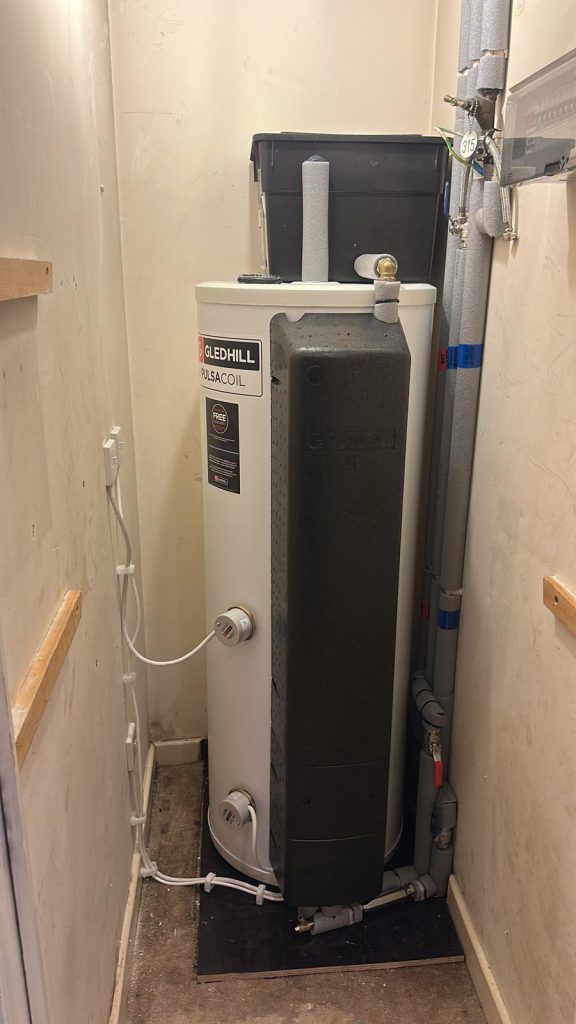
A Pulsacoil uses stored heat to provide domestic hot water, rather than working like a conventional gas boiler. A thermal store is a vessel that holds heated water and transfers its heat to domestic hot water when required.
The Gledhill Pulsacoil is an electrically heated system, not a conventional gas boiler. People sometimes use boiler as a general search term for a Pulsacoil, but the equipment and heating method differ. Knowing that distinction helps you describe the system accurately when requesting repair services.
Models in the range include Pulsacoil 3, Pulsacoil 2000, Pulsacoil A-Class and Pulsacoil 3D. Their components and service requirements may differ, so a model name is useful when an engineer considers parts or a repair approach. The model label is usually the clearest way to identify the unit.
The Gledhill Pulsacoil A-Class heats its thermal store with an immersion heater. A-Class systems can also be configured to use Economy Seven electricity, which provides lower-rate electricity during set overnight periods. That arrangement is model-specific, so it should not be assumed for every Pulsacoil.
An available manual can add useful detail about controls and the system’s configuration. The cylinder or casing may have a label that identifies the exact version. If you cannot find a manual, the model label still gives the engineer a practical starting point for identifying the correct system.
Check the model label before requesting parts, since versions in the range are not interchangeable by name alone.
Common Pulsacoil Faults and Their Symptoms
Lukewarm water, no hot water and erratic heating can each point to a different Pulsacoil fault. These signs can help an engineer focus an assessment, but symptoms alone cannot confirm which component has failed.
The same problem may have more than one cause, and separate faults can produce similar effects. Use the table for triage, not as a remote diagnosis. Visible leaks should not be ignored, even if the hot water still works.
| Symptom | Possible cause | What the engineer checks | Sensible next step |
|---|---|---|---|
| Lukewarm water | Immersion heater | Element condition | Book an assessment |
| No hot water | Thermostat | Thermostat operation | Report when the fault began |
| Erratic heating | Temperature sensor | Sensor readings | Note when heating changes |
| Visible leak or unusual noise | Possible leak or damaged component | Source and extent | Switch off the unit only if safe and contact an engineer promptly |
A lukewarm supply can indicate an immersion heater issue, while no hot water can indicate a thermostat fault. Erratic heating may point to a sensor, but none of these links proves the cause. An engineer will consider how the fault behaves and what the system shows.
Write down when the change began and whether it is constant or comes and goes. That detail can be more useful than a general description such as “not working”. If the fault changes during the day, note the time and what the system was doing.
Record any displayed fault code exactly as shown, without treating it as a diagnosis.
How a Qualified Engineer Diagnoses and Repairs the Unit
A repair visit should begin with safe isolation and a check of the unit’s exact model. The system combines electrical parts with water-system components, so internal work calls for a qualified engineer and a methodical approach.
UK domestic mains electricity is nominally 230 V, a level that can cause serious harm. Do not open the casing, test live wiring or try to replace electrical parts yourself. Even a simple-looking boiler fault can involve connections or components that are unsafe to handle without suitable training.
An engineer may carry out an immersion heater continuity test as one diagnostic check. That test helps assess whether the element’s electrical path is intact, but it is only one part of the investigation. The engineer may also assess related controls and sensors against the reported problem.
- Confirm the model and the symptoms you have reported.
- Isolate the supply and carry out appropriate safety checks.
- Test relevant components, including the immersion heater, thermostat and sensors.
- Explain the diagnosis, required parts and repair options before work proceeds.
The checks should match the system and the reported fault, rather than follow a guess based on one sign. If parts are needed, the engineer can explain their purpose and whether the repair depends on their availability. Ask how the proposed work addresses the diagnosed fault.
Before approving work, make sure the proposed repair and any further checks are clear. A professional explanation should identify the failed component and describe the work being offered. Ask the engineer to explain which component has failed before approving work.
Repair or Replacement, and Getting the Store Size Right
A repair is usually worth assessing before replacement, unless the unit’s condition or repair history makes a new system the more practical option. The engineer’s diagnosis, parts availability and past repairs help establish whether further work is sensible.
There is no age threshold that decides the choice on its own. A unit in suitable condition may be repairable, while repeated failures or unavailable parts can make replacement worth considering. The repair quote and the expected scope of work give you a clearer basis for comparing options.
Capacity also matters: an undersized store can leave residents short of hot water and may be overworked. A sizing guide allows about 35-45 litres per resident, but this is an estimate, not a recommendation for your property. The following daily figures illustrate different household-use levels.
| Consumption category | Litres per person per day | Indicative daily use for four people | Context |
|---|---|---|---|
| Low | 20-30 litres | 80-120 litres | Lower-use estimate |
| Average | 30-50 litres | 120-200 litres | Typical-use estimate |
| High | 50-70 litres | 200-280 litres | Higher-use estimate |
These figures reflect estimated use, not a precise tank specification. The calculation method is used in the EU energy labelling scheme. One sizing guide gives a minimum 200-litre tank for a four-person household, but the actual capacity needs an installer’s assessment.
A shower uses about 18 litres per minute at 40°C, equivalent to 11 litres at 60°C. A bath uses about 100 litres at 40°C, equivalent to 60 litres at 60°C. Shower length and bath frequency can shift household demand, so these examples cannot determine the right store size alone.
Ask the installer to size any replacement around the household’s actual hot-water use, not just the number of occupants.
Maintenance That Can Help Prevent Repeat Faults
Planned checks can reveal scale, pressure or valve issues before they cause a larger interruption. Maintenance can support performance, but the right care depends on the Pulsacoil model and the condition of its system.
Scale can reduce heat transfer, making the system less effective at passing heat into domestic hot water. An engineer should confirm whether flushing or descaling suits the particular model. Treating every unit in the same way may not be appropriate.
The expansion vessel helps manage pressure changes as water heats and cools. A pressure check can identify whether the vessel is working within the requirements for the system. Valves also need inspection, since their condition can affect how the unit manages water and pressure.
General guidance lists system flushing every 3-5 years and descaling as required. It also lists an annual expansion vessel pressure check and annual valve inspections. These intervals are guidance to check against the unit manual and an engineer’s advice, not a universal schedule for every model.
The manual and the system’s condition take priority over a generic timetable. An engineer can explain which checks suit your unit and whether its water quality or previous work affects the approach. A service record can help distinguish a new issue from a recurring one.
Good maintenance does not guarantee that faults will never occur. It gives an engineer a record of past checks and components, and may help identify changes in performance. Keep a dated record of servicing and any replaced components for future fault diagnosis.
Pulsacoil Repair Hampstead: Booking and What to Ask
A booking request is easier to assess when it includes the postcode, model label and a clear description of the fault. London Electricians 24/7 is the service provider for your enquiry, and you can confirm the available services directly.
Hampstead is in the NW3 postcode district, but the full postcode helps identify your location accurately. Tell the provider whether the problem is urgent, especially if there is a leak or you have lost all hot water. Confirm the actual response options directly with the provider.
A repair quote depends on the diagnosed fault, parts required, access and urgency. Before work starts, ask whether the quoted price includes the call-out charge, labour, parts and VAT. Also ask what guarantee, if any, applies to the repair or supplied parts.
Prepare these details before contacting the provider:
- Your full postcode.
- The model name shown on the unit label.
- The symptoms and when they began.
- Any visible leak or displayed fault code.
These details help the engineer understand the enquiry without assuming the cause. If the model label is difficult to read, explain that when you contact the provider. Do not guess the version, since the exact model can affect the parts and repair options.
Pricing can change if an assessment finds a different fault or additional work is needed. Ask for the proposed scope before authorising anything, including whether parts are included and how extra work would be priced. A clear price discussion helps you compare the repair with other options.
Describe an urgent leak or complete loss of hot water when requesting an appointment, then confirm the actual response options directly with the provider. Get the scope and total charge agreed before authorising the repair.
Arrange a Clear Next Step for Your Hot Water
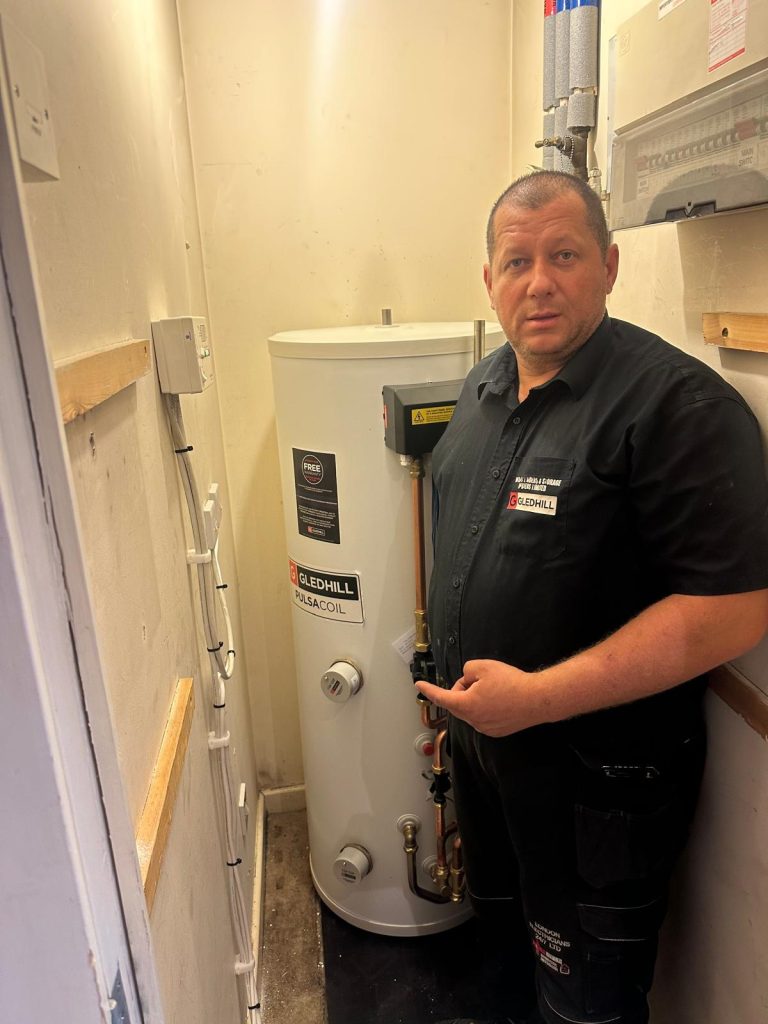
A clear description of the unit and fault is the best starting point for arranging an assessment. The model label and the timing of the problem can help London Electricians 24/7 understand your enquiry.
You can ask about an assessment and appointment options through the provider’s listed contact channel. Describe what has changed and share your postcode, then discuss the next practical step for your hot water services.
An informed repair decision begins with an accurate assessment, rather than an assumption about the fault. Contact London Electricians 24/7 with your model and postcode to ask about the next available appointment.
FAQ
How much does a Pulsacoil repair cost in Hampstead?
The cost depends on the diagnosed fault, labour, parts, access and urgency. A repair quote should set out the work and the charges that apply, rather than rely on an unsupported starting price. Before authorising work, ask whether the call-out charge and VAT are included, and whether parts or extra labour could change the total.
How long does a Pulsacoil repair usually take?
The time depends on the fault, parts availability and whether further work is needed. A straightforward repair may differ greatly from work that requires a specific part or additional checks. Ask the engineer for an estimate after the diagnosis, and clarify whether the estimate includes testing the system after the repair.
Can I reset a Pulsacoil myself?
You can follow the unit manual for a user-level reset, if that model provides one. Do not open the casing or touch wiring while trying to clear a fault. If the problem returns after a reset, stop repeating it and arrange an assessment, since resetting does not identify or fix the underlying cause.
Is a leaking Pulsacoil safe to keep using?
A leaking Pulsacoil needs prompt assessment, and you should avoid touching wet electrical areas. Switch off the supply only if you can do so safely without approaching water near electrical parts. Tell the provider where the leak is visible and whether it is worsening, then follow their guidance about the next safe step.
Should I repair or replace an older Pulsacoil?
Base the choice on the engineer’s diagnosis, the unit’s condition, parts availability and repair history, not an age limit alone. A repair may suit a unit in sound condition with a clear, manageable fault. Repeated faults or unavailable parts can make replacement more practical, so compare the recommended work and its scope before deciding.
What details should I give when booking a Pulsacoil engineer?
Give the engineer your full postcode, the model label, the symptoms and when they began. Mention any visible leak and read out a displayed fault code exactly as it appears. These details help identify the system and assess the enquiry, but they do not confirm the internal fault before an engineer checks the unit.