
Pulsacoil Repair Fulham
PulsaCoil repair in Fulham helps restore an unreliable or failed hot-water supply through fault diagnosis and, where appropriate, component repair or replacement. Homeowners, landlords and managing agents can arrange an assessment when a property’s hot water stops working properly. A thermal store is a hot-water system that stores heat in water so it can be used when domestic hot water is needed.
The checks help establish whether the PulsaCoil unit needs a repair or whether replacement is more suitable. The right approach depends on what an engineer finds and whether the existing system still suits the property. A nearby postcode does not guarantee that your address receives water from the same supply area as another Fulham property.
Clear information at booking can help the engineer prepare for the visit. Note when the problem began, whether it happens all the time, and any effect on your hot-water supply. Have the model name and a clear description of the hot-water problem ready when arranging help.
Common faults that interrupt hot water
No hot water can point to an immersion heater, thermostat or feed-tank issue, but the symptom alone cannot identify the failed part. Weak heating can have several possible causes, so an inspection is needed before choosing a repair.
Details about when the issue occurs can help the engineer narrow down what to check. Note whether the water is always cool, heats only at certain times, or stops heating after a short period. These observations describe the problem, but they do not confirm a failed component.
| Symptom | Possible fault areas | Useful detail to report |
|---|---|---|
| No or weak hot water | Immersion heater, thermostat, low feed-tank water level | Whether all taps are affected |
| Intermittent heating or shutdown | Thermostat, sensors, electrical controls | When heating stops or restarts |
| Leak | Tank, connection or other pipework | Where water appears and when |
| Unusual noise | Cracked tank or faulty hardware | When the noise begins and how long it lasts |
| Electrical trip | Immersion heater, wiring or other electrical parts | Which circuit trips and when |
A leak from pipework and a leak from the tank itself are not the same repair. The source affects what work may be suitable, and a visible wet patch does not always show where water first escaped. Keep the area clear so the engineer can inspect it safely.
Unusual noise can be associated with a cracked tank or faulty hardware, but sound alone cannot confirm either problem. Describe whether it happens during heating, after hot water use, or at other times. Do not remove panels to investigate the pulsacoil unit yourself.
An electrical trip may involve the immersion heater or another electrical part. If it happens repeatedly, record when it occurs rather than repeatedly restoring power. Accurate notes help distinguish occasional symptoms from a pattern that needs attention.
Share any changes in performance, noise or visible water with the person arranging the repair. This gives the engineer useful context without treating a symptom as a diagnosis. If water is reaching electrical components, stop using the unit and arrange a qualified assessment.
What happens during a diagnostic visit
A sound repair visit starts with inspection and testing, not an automatic part replacement. The engineer checks the pulsacoil system and identifies what evidence supports a proposed repair.
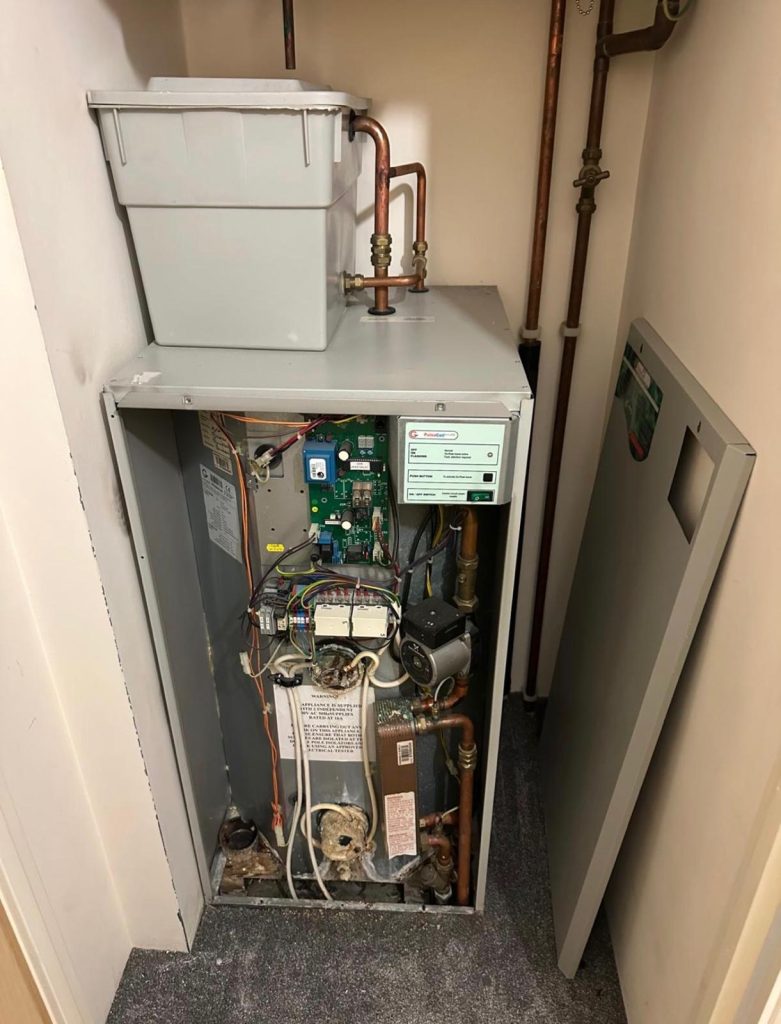
Checks may include the thermostat, sensors, immersion heater and printed circuit board, or PCB. Models include older PulsaCoil units, PulsaCoil 2000 and A-Class. The checks should suit the model and the reported issue, rather than assume every system uses identical parts.
- Inspect the unit, visible condition and controls.
- Test relevant electrical and temperature components, including sensors where needed.
- Isolate the fault using the results of those checks.
- Explain the proposed repair and compatible parts before proceeding.
- Test operation after the work and report the result.
A first visit may establish the likely cause, but it cannot always confirm an intermittent fault. An intermittent fault may not show during a single test, so the engineer should explain any limits on diagnosis.
If the fault does not appear during testing, the engineer may need more information about when it occurs. Tell them whether the problem follows a particular use pattern or time of day. This can help decide whether further checks are useful.
Before work starts, make sure you understand which parts are included and whether the engineer needs your approval for extra work. Compatible parts matter because a component must suit the model and the existing controls. A repair should not proceed on an assumption that the first suspected part has failed.
Do not open electrical covers or attempt component repairs yourself. The system contains electrical parts, and unsafe work can create further risk. Ask the engineer to confirm what was tested and whether the system operated normally after the work.
Pulsacoil Repair Fulham: local water and property factors
Fulham’s water is not uniform across every nearby address, so a postcode is only a guide to the supply area. In 2024, Thames Water reported that HURLINGHAM, including example postcode SW6 5JJ, had a hardness of 252 mg/l as CaCO₃, classed as hard water.
Water hardness from 201-300 mg/l is classed as hard, while levels above 300 mg/l are very hard. This local figure is useful context if water conditions matter during an inspection. It does not diagnose a PulsaCoil fault or establish what has happened inside a particular property.
Of 10 postcodes checked near Fulham, six returned the HURLINGHAM supply area. Nearby addresses can receive water from different supply areas, so a postcode close to yours may not share your supply. Check the property’s actual supply area if water conditions are relevant to the inspection.
The mix of flats and converted residential properties in Fulham can affect access to the appliance and the layout of the system. For example, the unit may be in a cupboard or a shared access area. These details help with planning a visit, but they do not show that a building has an older unit.
West London addresses can sit close together while receiving water through different supply areas. A property’s actual supply information is more useful than assuming conditions match a nearby street. Give the engineer the full postcode and, if known, the PulsaCoil model and its location in the property.
How are repair costs and quotes worked out?
A reliable quote should follow an inspection and identify the work and parts it covers before you agree to proceed. The price depends on the confirmed fault, labour, access, parts availability, and whether repair or replacement is suitable.
A quote for a PulsaCoil 2000 or A-Class may differ according to the work required. Relevant parts could include sensors, thermostats, immersion heaters or PCBs. The model alone does not determine the price, because the engineer must establish which parts and labour the job needs.
Ask for labour, parts and any further work to be itemised before authorising the repair. This makes transparent pricing easier to understand and gives you a clear record of the agreed scope. Check whether the quote covers the visit and testing, as well as the proposed repair.
Access can affect the work involved. A unit that is difficult to reach may take more time to inspect or repair than one with clear access. Parts availability can also affect the plan, particularly when the engineer needs a compatible component for a specific model.
A firm price may not be possible until an intermittent fault has been reproduced or the unit has been inspected. The engineer should explain what remains uncertain and what further work could change the quoted amount. Do not treat an early estimate as approval for additional work.
Ask whether replacement is being proposed because repair is not technically suitable, or because the repair cost would not make sense for the system. A clear explanation lets you compare the options without relying on a broad recommendation. Keep the written quote so you can check any proposed change against the original scope.
Choosing repair, replacement or a new cylinder
Repair is appropriate when the fault is repairable and the existing system still suits the property; replacement is for a unit that is no longer technically suitable or cost-effective to repair. A sizing review is useful when hot-water demand and the existing cylinder capacity do not match.
| Option | When it may fit | Key consideration |
|---|---|---|
| Repair | The fault is repairable and the system remains suitable | Confirm the repair restores normal operation |
| Replacement | Repair is not technically suitable or cost-effective | Check the new unit suits the property and installation |
| Sizing review | Demand or existing cylinder capacity is unsuitable | Base the review on residents’ actual hot-water use |
A general thermal-store sizing allowance is 35-45 litres per resident. Household size is only a starting point, because habits and shower or bath use affect demand. A small or incorrectly sized store can leave residents short of hot water and may be overworked.
A shower uses about 18 litres per minute at 40°C, equivalent to 11 litres at 60°C. A bath uses about 100 litres at 40°C, equivalent to 60 litres at 60°C. These figures help show why the temperature and type of use matter when reviewing capacity.
Daily use guidelines per person are 20-30 litres for low use, 30-50 litres for average use and 50-70 litres for high use. On these calculations, a standard four-person household would require a minimum 200-litre hot-water tank.
The consumption calculation is used by the EU energy-labelling scheme, and the installer is responsible for calculating the correct tank size. The right capacity depends on more than the number of residents. A new cylinder or thermal store should match the hot-water demand expected in the property.
When considering a PulsaCoil 2000 replacement or a different system, include the existing installation and available space in the review. A capacity change can affect how the system serves the property, so the installer should assess the full arrangement. Ask the installer to size any replacement against the residents’ actual hot-water use, not property size alone.
Maintenance for homeowners and landlords
Planned attention is most useful when it records changes in performance before a minor issue becomes a loss of hot water. Simple observations can help you describe what has changed, while specialist maintenance support is needed for electrical faults or leaks.
A thermal store may include a feed tank, immersion heater, thermostat and sensors. Water level and water quality are maintenance considerations, and limescale can affect system components. Routine checks help you notice changes, but they do not establish the cause of a problem.
- Look for visible leaks around the unit and nearby pipework.
- Note changes in hot-water performance, including when they occur.
- Report repeated electrical trips without repeatedly resetting them.
- Arrange an inspection if water-level concerns, unusual noise or a recurring fault arises.
Routine checks do not replace specialist investigation of electrical faults or leaks. Do not open the unit or try to repair its controls as part of a household check. Give the engineer your observations so they can decide what inspection is appropriate.
Landlords should address reported hot-water system problems and make sure tenants know how to report changes. In managed properties, establish who arranges access and who can approve work before a visit. This avoids uncertainty when an engineer needs entry or further work authorised.
For maintenance support, keep a simple record of dates, reported changes and any work carried out. This can help distinguish a new issue from a recurring one without replacing a professional assessment. Record whether tenants can provide access directly or need arrangements through a managing agent.
A property’s maintenance plan should reflect its access arrangements and the people responsible for decisions. Make sure the person booking the service can share relevant information with the engineer. For a rental or managed property, record the reported symptom, access arrangements and the person authorising the work.
Arrange PulsaCoil help in Fulham
If your PulsaCoil has stopped providing reliable hot water, arrange an assessment and describe the symptoms clearly. London Electricians 24/7 can discuss an inspection through the website. Share the full postcode, the model if its label is visible, and what has changed in the property. Mention any leak or electrical concern when you make contact. These details help the team understand the service you need and consider the access arrangements for the visit. You can contact us today to discuss support, but attendance time, repair work and costs depend on the circumstances. Contact London Electricians 24/7 through the website with the model and postcode to discuss the next step.
FAQ
Can I reset a PulsaCoil after it trips the electrics?
Do not keep resetting a PulsaCoil after it trips the electrics; stop using it if the trip recurs and arrange a qualified electrical assessment. Repeated trips can signal an electrical problem that needs proper testing. Note when the trip happens and which circuit is affected, but do not remove covers or attempt electrical repairs yourself.
How long does a PulsaCoil repair take?
A PulsaCoil repair takes as long as the confirmed fault, access and required parts allow, so there is no reliable fixed duration. A straightforward repair may involve less work than a fault needing further tests or a specific component. The engineer can give a clearer time estimate after assessing the unit and checking whether the part is available.
Can a leaking PulsaCoil be repaired, or does it need replacement?
A leaking PulsaCoil may be repairable if water is escaping from a connection, while a leak from the tank itself may require replacement. An inspection is needed to identify the source and assess the condition of the unit. Stop using the system if water is near electrical parts, and arrange a qualified assessment rather than assuming the leak is minor.
Why does my PulsaCoil only heat water overnight?
A PulsaCoil that heats water only overnight may be affected by off-peak supply settings, controls or immersion components. Those are possible checks, not a confirmed diagnosis. Note whether the heating pattern has changed and whether daytime controls respond. An engineer can test the system and establish whether the timing is set as intended or reflects a fault.
Does hard water cause PulsaCoil problems in Fulham?
Hard water can affect system components through limescale, but hardness alone cannot diagnose a PulsaCoil fault. In 2024, the HURLINGHAM supply area had a reported hardness of 252 mg/l as CaCO₃, classed as hard. Nearby Fulham addresses may receive water from other supply areas, so check the property’s actual supply if conditions matter.
What details should I give when booking a PulsaCoil inspection?
Give the postcode, model label if accessible, symptoms, any leak or electrical trip, and access arrangements when booking. Say when the problem began and whether it happens continuously or at certain times. If the property is rented or managed, include the contact who can arrange entry and the person authorised to approve work.